
Proctocare Clinic — Dr. Rajendra Sonavane
Best Piles Doctor in Mumbai — Painless Laser Treatment
40+ years of experience, M.S., F.I.C.S., F.I.A.G.E.S. — trained in laser surgery in Germany & Poland. Day-care procedures, cashless support & no-cost EMI available across 5 Mumbai locations.
Piles, also known as hemorrhoids, are swollen veins in the lower rectum or around the anus that can cause pain, itching, bleeding, and discomfort during bowel movements. While many people experience temporary relief after treatment, some find that their piles return repeatedly. Recurrent piles can affect daily activities, reduce quality of life, and cause ongoing discomfort if the underlying causes are not addressed.
Understanding why piles keep coming back is the first step toward preventing recurrence. In many cases, recurring hemorrhoids are linked to lifestyle habits, bowel patterns, or medical conditions that continue to place pressure on the veins in the anal region. By identifying these risk factors and making healthy lifestyle changes, it is possible to reduce the chances of future flare-ups and maintain better digestive health.
What Are Recurring Piles?
Recurring piles refer to hemorrhoids that return after previous treatment or after symptoms have temporarily improved. Although medications, dietary changes, or minimally invasive procedures may relieve symptoms, piles can recur if the underlying causes remain unchanged. The condition may appear weeks, months, or even years after the initial episode, particularly in individuals who continue to experience constipation, prolonged straining, or other contributing factors.
Recurring piles may cause symptoms such as rectal bleeding, itching around the anus, pain during bowel movements, swelling, mucus discharge, or the sensation of a lump near the anal opening. These symptoms should always be evaluated by a qualified colorectal or general surgeon, especially if bleeding is frequent or severe.
Why Do Piles Keep Coming Back?
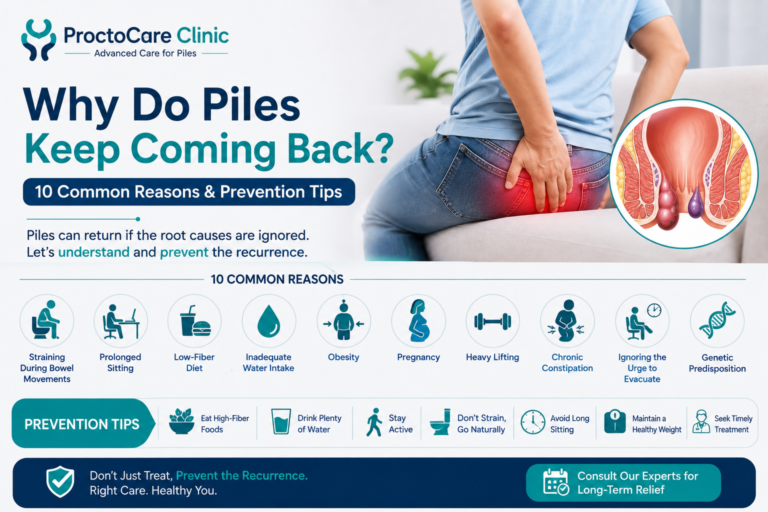
There is rarely a single reason why hemorrhoids recur. Instead, recurrence is usually the result of multiple lifestyle and health-related factors that continue to place stress on the blood vessels around the rectum.
Chronic Constipation
One of the most common reasons piles return is chronic constipation. Hard stools and difficulty passing bowel movements increase pressure on the veins around the anus. Repeated straining can cause existing hemorrhoids to enlarge or lead to the development of new ones. Increasing dietary fiber, drinking adequate water, and maintaining regular bowel habits can significantly reduce this risk.
Frequent Straining During Bowel Movements
Excessive straining while using the toilet places continuous pressure on the rectal veins. Even after successful treatment, repeated straining can weaken the surrounding tissues and contribute to the recurrence of piles. Gentle bowel movements and avoiding prolonged effort are essential for long-term prevention.
Low-Fiber Diet
A diet lacking fruits, vegetables, whole grains, and legumes often leads to hard stools and constipation. Fiber helps soften stools and promotes smooth bowel movements, reducing pressure on the anal veins. Individuals who consistently consume low-fiber diets have a higher likelihood of developing recurrent hemorrhoids.
Prolonged Sitting
Sitting for extended periods, especially on the toilet or at a desk, increases pressure within the pelvic region and can contribute to hemorrhoid recurrence. Modern sedentary lifestyles have made prolonged sitting a common risk factor for piles. Taking regular breaks, standing, and incorporating physical activity into daily routines can help improve circulation and reduce pressure.
Pregnancy and Childbirth
Pregnancy places additional pressure on the pelvic veins due to the growing uterus and hormonal changes. During childbirth, pushing during labor can further increase pressure on the rectal veins. As a result, many women experience hemorrhoids during pregnancy or after delivery, and these may recur in future pregnancies if preventive measures are not followed.
Obesity and Excess Body Weight
Being overweight increases pressure on the abdominal and pelvic regions, making it easier for hemorrhoids to develop or return. Maintaining a healthy weight through balanced nutrition and regular exercise can lower the risk of recurrence while improving overall digestive health.
Lack of Physical Activity
Regular movement supports healthy digestion and helps prevent constipation. A sedentary lifestyle slows bowel function and increases the likelihood of hard stools, making recurrent piles more common. Walking, swimming, yoga, and other moderate physical activities promote healthy bowel habits and reduce strain during bowel movements.
Chronic Diarrhea
While constipation is a well-known cause of hemorrhoids, persistent diarrhea can also irritate the anal region and contribute to recurring piles. Frequent bowel movements and repeated wiping can inflame sensitive tissues, increasing discomfort and delaying healing.
Ignoring Early Symptoms
Many individuals delay seeking medical treatment when they notice mild bleeding, itching, or discomfort. Ignoring these early warning signs allows hemorrhoids to worsen over time, making recurrence more likely. Early consultation with a healthcare professional often results in simpler and more effective treatment.
Incomplete or Delayed Treatment
Some patients stop medication as soon as symptoms improve or rely only on home remedies without addressing the underlying condition. In more advanced cases, conservative treatment alone may not be sufficient. Procedures such as laser piles surgery, rubber band ligation, or other minimally invasive treatments may be recommended for long-term relief, depending on the severity of the hemorrhoids.
How Can You Prevent Piles from Coming Back?
Preventing recurrent piles requires consistent lifestyle changes rather than temporary solutions. Eating a fiber-rich diet, staying well hydrated, exercising regularly, maintaining a healthy weight, and responding promptly to the urge to have a bowel movement all help reduce pressure on the anal veins. Avoiding prolonged sitting, limiting time spent on the toilet, and practicing good bowel habits can also significantly lower the chances of recurrence.
It is equally important to follow your doctor’s recommendations after treatment, attend follow-up appointments if advised, and continue preventive measures even after symptoms have resolved. Long-term commitment to healthy habits is often the most effective way to prevent piles from returning.
When Should You See a Doctor?
Although mild hemorrhoids may improve with conservative treatment, persistent or recurring symptoms should never be ignored. If you experience repeated rectal bleeding, severe pain, prolapsed hemorrhoids, mucus discharge, or symptoms that interfere with daily life, medical evaluation is essential. Similar symptoms may also occur in other colorectal conditions, making accurate diagnosis important.
A specialist can determine the exact cause of your symptoms and recommend the most appropriate treatment, ranging from lifestyle modifications and medications to advanced minimally invasive procedures.
What Are the Treatment Options for Recurring Piles?
Treatment depends on the severity of the condition and the frequency of recurrence. Early-stage hemorrhoids often respond well to dietary improvements, increased fluid intake, medications, and sitz baths. However, persistent or advanced piles may require minimally invasive procedures such as rubber band ligation, infrared coagulation, or laser treatment. In severe cases, surgical hemorrhoid removal may be recommended.
Modern laser piles treatment has become a preferred option for many patients because it is minimally invasive, causes less pain, involves minimal bleeding, and usually allows a quicker recovery compared to conventional surgery. The most suitable treatment should always be determined after a thorough evaluation by a qualified surgeon.
Frequently Asked Questions
Piles often recur because of ongoing constipation, straining during bowel movements, prolonged sitting, a low-fiber diet, obesity, or incomplete treatment of the original condition.
Many cases can be effectively treated, especially when the underlying causes are addressed. Advanced treatments such as laser piles surgery may reduce the risk of recurrence, but maintaining healthy bowel habits remains essential.
Yes. Staying hydrated softens stools, reduces constipation, and decreases the need for straining during bowel movements, lowering the risk of recurring hemorrhoids.
Laser piles treatment is a minimally invasive option that is effective for many patients with recurring or advanced hemorrhoids. Your doctor will determine whether it is suitable for your condition.
You should seek medical attention if piles recur frequently, cause severe pain, persistent bleeding, prolapse, or do not improve with lifestyle changes and medication.
No comment