
Proctocare Clinic — Dr. Rajendra Sonavane
Best Piles Doctor in Mumbai — Painless Laser Treatment
40+ years of experience, M.S., F.I.C.S., F.I.A.G.E.S. — trained in laser surgery in Germany & Poland. Day-care procedures, cashless support & no-cost EMI available across 5 Mumbai locations.
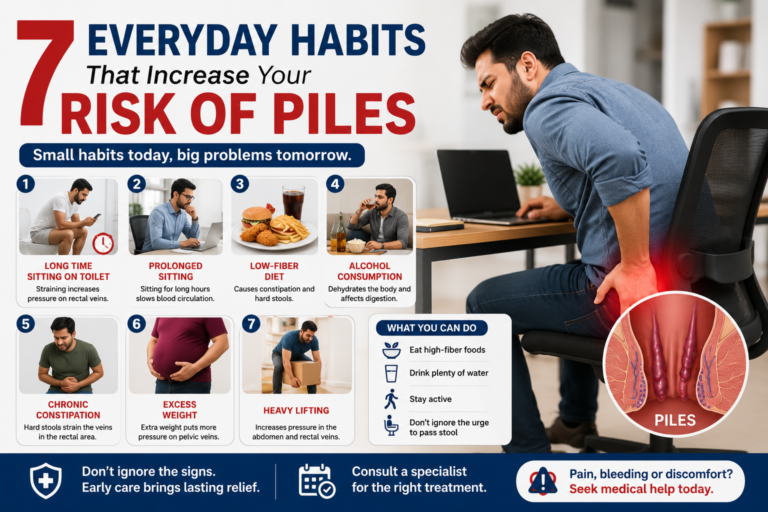
In my four decades of treating piles, one thing has become very clear: for most people, piles aren’t simply bad luck — they’re often the result of everyday habits we don’t think twice about. Piles (hemorrhoids) are swollen veins in and around the anus that develop mainly due to increased pressure in that area. The encouraging part is that because so many causes are habit-related, piles are largely preventable. Here are seven common daily habits that could be raising your risk — and simple ways to change them.
1. Straining during bowel movements
This is the single biggest culprit I see. Straining and pushing hard to pass stool sharply increases the pressure on your anal veins, causing them to swell. Straining is usually a result of constipation, so the goal is to keep your stools soft and easy to pass — never force it.
2. Sitting on the toilet for too long
Modern life has brought the phone into the bathroom, and this is doing real damage. Sitting on the toilet for long periods — scrolling, reading, waiting — keeps the anal area under continuous pressure and encourages the veins to swell. My advice is simple: leave your phone outside, and treat the toilet as a quick, focused visit of a few minutes.
3. A low-fibre diet
A diet heavy in refined, processed, and fried foods but low in fibre leads to hard stools and constipation — which brings you right back to straining. Fibre from fruits, vegetables, whole grains, and pulses adds bulk and softness to your stool, making bowel movements smooth and effortless.
4. Not drinking enough water
Fibre only works well when paired with adequate fluids. Dehydration makes your stools dry and hard, forcing you to strain. Drinking enough water throughout the day — more in Mumbai’s heat — keeps things moving comfortably and is one of the easiest protective habits of all.
5. A sedentary lifestyle and prolonged sitting
Long hours of continuous sitting — at a desk, behind the wheel, or on the sofa — increase pressure around the anal region and slow down your digestion and circulation. If you have a desk job, make it a point to stand up and move every hour or so, and build regular physical activity into your routine.
6. Ignoring the urge to go
When you feel the urge to pass stool, your body is telling you it’s ready. Repeatedly delaying or ignoring that urge — because you’re busy or away from home — causes the stool to sit longer and harden, so you end up straining more when you finally go. Respond promptly when nature calls.
7. Heavy lifting and excessive straining
Whether it’s lifting heavy weights at the gym with the wrong technique or heavy manual work, straining while lifting raises the pressure in your abdomen and pushes down on the anal veins. Lift with proper form, breathe out during exertion rather than holding your breath, and avoid over-straining. (Carrying excess body weight adds to this pressure too, so maintaining a healthy weight helps.)
How to protect yourself
The pattern behind all seven habits is the same — avoid pressure and avoid straining. So: eat plenty of fibre, drink enough water, stay active, don’t strain or linger on the toilet, respond to the urge promptly, and consider an improved toilet posture (a footstool that raises your knees can help). These small, consistent changes are remarkably effective at keeping piles away.
When habits aren’t enough: see a specialist
Sometimes, despite your best efforts, piles develop — and that’s nothing to be ashamed of. If you notice bleeding, pain, itching, or a lump around the anus, please don’t ignore it or self-treat indefinitely. Bleeding in particular should always be checked by a specialist. The earlier piles are treated, the simpler and more comfortable the treatment.
Expert piles care at Proctocare Clinic
At Proctocare Clinic, I provide advanced, painless laser treatment for piles with no cuts, no stitches, and same-day discharge. With over 40 years of experience and clinics across Kalyan, Dombivli, Thane, Goregaon and Malad, along with cashless facilities and No-Cost EMI, expert relief is within easy reach.
📞 Book a consultation: +91 80971 01000 · Dr. Rajendra Sonavane, Proctocare Clinic — Mumbai & Thane
Frequently Asked Questions
The main cause is increased pressure on the anal veins, most often from straining during bowel movements due to constipation. Everyday habits like prolonged sitting and a low-fibre diet contribute.
Yes. Sitting for long periods — especially on the toilet — keeps the anal veins under pressure and can lead to or worsen piles.
Indirectly, yes. A low-fibre diet causes hard stools and constipation, which lead to straining — the biggest trigger for piles.
Largely, yes. Eating fibre, drinking enough water, staying active, avoiding straining and long toilet visits, and responding to the urge to go all significantly reduce your risk.
Straining while lifting heavy weights increases abdominal and anal pressure, which can contribute to piles. Proper technique and breathing help.
No comment