
Proctocare Clinic — Dr. Rajendra Sonavane
Best Piles Doctor in Mumbai — Painless Laser Treatment
40+ years of experience, M.S., F.I.C.S., F.I.A.G.E.S. — trained in laser surgery in Germany & Poland. Day-care procedures, cashless support & no-cost EMI available across 5 Mumbai locations.
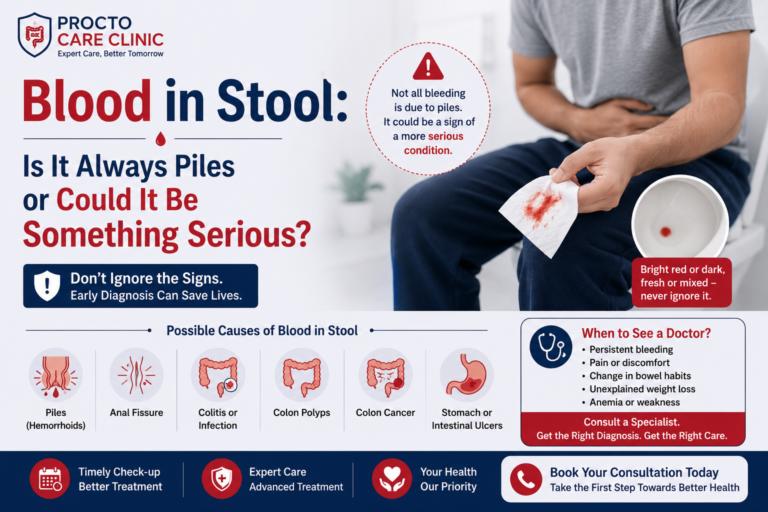
Noticing blood in your stool or on the toilet paper after a bowel movement can be alarming. While many people immediately assume that piles (hemorrhoids) are the cause, rectal bleeding can result from a variety of conditions, ranging from minor issues to more serious digestive diseases. Although piles are among the most common reasons for blood in stool, it is important not to ignore this symptom, especially if it occurs repeatedly or is accompanied by pain, weight loss, or changes in bowel habits.
Understanding the possible causes of blood in stool, recognizing warning signs, and seeking timely medical evaluation can help ensure early diagnosis and appropriate treatment.
What Does Blood in Stool Mean?
Blood in stool refers to bleeding that occurs anywhere along the digestive tract. The appearance of the blood often provides clues about where the bleeding is coming from. Bright red blood usually indicates bleeding from the lower part of the digestive tract, such as the rectum or anus, while dark red or black, tar-like stools may suggest bleeding from higher up in the gastrointestinal tract.
The amount of blood can vary from a few drops noticed on toilet paper to larger amounts mixed with the stool. Regardless of the quantity, any unexplained rectal bleeding should be evaluated by a healthcare professional.
Is Blood in Stool Always Caused by Piles?
The simple answer is no. While piles are a very common cause of rectal bleeding, they are not the only explanation. Assuming that every episode of blood in stool is due to hemorrhoids may delay the diagnosis of other conditions that require prompt medical attention.
Piles develop when the veins around the anus or lower rectum become swollen and inflamed. During bowel movements, these swollen veins may bleed, producing bright red blood on the stool or toilet paper. However, similar symptoms can also occur in conditions such as anal fissures, inflammatory bowel disease, diverticular disease, intestinal infections, colon polyps, and colorectal cancer.
A proper medical evaluation is the only reliable way to determine the exact cause.
What Are the Common Causes of Blood in Stool?
One of the most common causes of blood in stool is hemorrhoids, also known as piles. They often develop due to chronic constipation, prolonged sitting, pregnancy, obesity, or excessive straining during bowel movements. Bleeding from piles is usually painless and appears as bright red blood.
Another frequent cause is an anal fissure, which is a small tear in the lining of the anus. Anal fissures commonly occur after passing hard stools and are often associated with sharp pain during and after bowel movements. Small amounts of bright red blood may also be noticed.
Inflammatory bowel diseases (IBD), including Crohn’s disease and ulcerative colitis, can also cause rectal bleeding. These chronic inflammatory conditions may produce symptoms such as abdominal pain, diarrhea, fatigue, weight loss, and blood mixed with stool.
Diverticular disease is another possible cause, particularly in older adults. Small pouches that develop in the colon wall can sometimes bleed suddenly, resulting in painless rectal bleeding.
What Symptoms Should Never Be Ignored?
Although occasional bleeding caused by piles or fissures may not always indicate a serious problem, certain symptoms require immediate medical attention. Persistent or recurrent blood in stool, severe abdominal pain, unexplained weight loss, black or tarry stools, dizziness, fainting, anemia, or a significant change in bowel habits should never be ignored.
If blood in stool is accompanied by fever, severe diarrhea, or continuous rectal bleeding, prompt medical evaluation is essential to identify the underlying cause and begin appropriate treatment.
How Is the Cause of Blood in Stool Diagnosed?
Diagnosing the cause of blood in stool begins with a detailed discussion of your symptoms and medical history, followed by a physical examination. Depending on the clinical findings, your doctor may recommend blood tests to evaluate for anemia or infection and stool tests to detect hidden blood or infectious organisms.
Imaging studies or specialized procedures may also be necessary. Anoscopy and proctoscopy allow direct examination of the anal canal and lower rectum, while a colonoscopy enables the doctor to examine the entire colon and identify conditions such as polyps, inflammatory bowel disease, diverticular disease, or colorectal cancer. In selected cases, CT scans or other imaging techniques may be used to investigate gastrointestinal bleeding further.
How Is Blood in Stool Treated?
Treatment depends entirely on the underlying cause. When bleeding is caused by hemorrhoids, conservative measures such as increasing dietary fiber, drinking plenty of water, avoiding prolonged straining during bowel movements, and using prescribed medications may be sufficient. Advanced cases may require minimally invasive procedures or surgical treatment.
Anal fissures often improve with stool softeners, increased fiber intake, warm sitz baths, and topical medications that promote healing. Chronic fissures may require surgical management.
Inflammatory bowel disease usually requires long-term treatment with anti-inflammatory medications, immune-modulating drugs, and regular follow-up with a gastroenterologist.
Infections are treated according to the specific organism responsible and may require antibiotics or antiparasitic medications when indicated.
If colon polyps are detected during colonoscopy, they can often be removed immediately to reduce the risk of future cancer. Colorectal cancer treatment depends on the stage of the disease and may include surgery, chemotherapy, radiation therapy, targeted therapy, or a combination of these treatments.
Frequently Asked Questions
No. While piles are a common cause of rectal bleeding, blood in stool can also result from anal fissures, infections, inflammatory bowel disease, colon polyps, diverticular disease, or colorectal cancer.
You should seek medical attention if the bleeding is persistent, heavy, associated with severe pain, black stools, weight loss, dizziness, anemia, or changes in bowel habits.
Yes. Chronic constipation can lead to hemorrhoids or anal fissures, both of which commonly cause bright red blood during bowel movements.
Doctors may recommend blood tests, stool tests, anoscopy, proctoscopy, colonoscopy, or imaging studies to identify the exact cause of the bleeding.
Yes. Many cases caused by hemorrhoids, fissures, or infections can be managed with medications, dietary changes, hydration, and lifestyle modifications. Surgical treatment is considered only when necessary or for more serious conditions.





No comment