
Proctocare Clinic — Dr. Rajendra Sonavane
Best Piles Doctor in Mumbai — Painless Laser Treatment
40+ years of experience, M.S., F.I.C.S., F.I.A.G.E.S. — trained in laser surgery in Germany & Poland. Day-care procedures, cashless support & no-cost EMI available across 5 Mumbai locations.
Many people experience pain, bleeding, or discomfort around the anal region but often assume they are suffering from the same condition. In reality, piles, fissures, and fistulas are three different anorectal disorders that require different treatment approaches. Because the symptoms can appear similar in the early stages, many people delay seeking medical attention or try home remedies that may not address the underlying problem. Understanding the difference between piles, fissures, and fistulas is essential for receiving the right diagnosis and treatment before complications develop.
Although these conditions affect the anal area, they differ in their causes, symptoms, severity, and treatment methods. Early consultation with a colorectal surgeon or proctologist can help relieve symptoms quickly and prevent long-term complications.
What Are Piles, Fissures, and Fistulas?
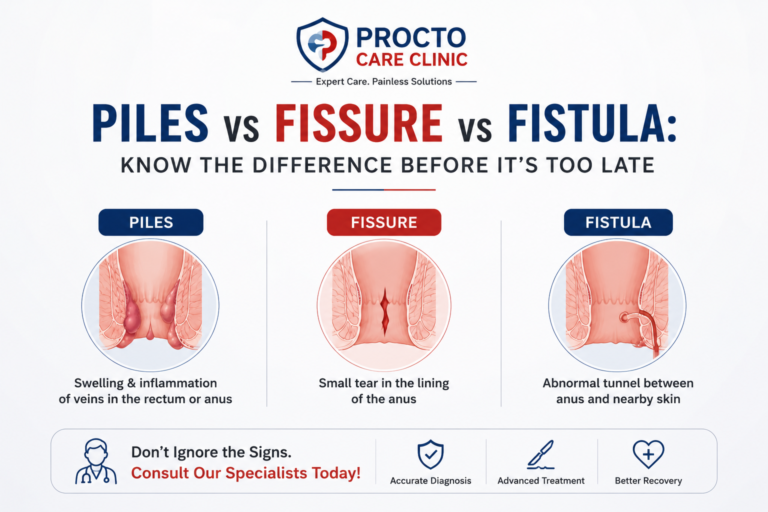
Piles, fissures, and fistulas are common conditions affecting the anus and rectum, but they are not the same disease. Piles are swollen veins inside or around the anus, similar to varicose veins. A fissure is a small tear in the lining of the anal canal that usually causes sharp pain during bowel movements. A fistula is an abnormal tunnel that develops between the anal canal and the skin around the anus, usually following an infection or abscess.
Although all three conditions may cause pain or bleeding, their underlying causes and treatments are completely different. Identifying the correct condition is the first step toward effective treatment.
What Are Piles (Hemorrhoids)?
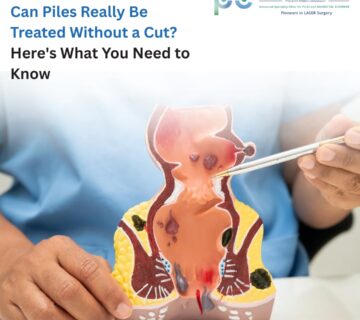
Piles, also known as hemorrhoids, occur when the veins in the lower rectum or anus become swollen due to increased pressure. This condition is common among adults and may develop because of chronic constipation, prolonged sitting, obesity, pregnancy, heavy lifting, or straining during bowel movements.
People with piles often notice painless bleeding during bowel movements, itching around the anus, swelling, or a lump near the anal opening. In some cases, larger hemorrhoids may prolapse outside the anus and cause discomfort while sitting or walking.
Treatment depends on the severity of the condition. Mild piles can often be managed with dietary changes, increased water intake, medications, and lifestyle modifications. Advanced cases may require minimally invasive procedures such as laser piles surgery, stapler surgery, or hemorrhoidectomy.
What Is an Anal Fissure?
An anal fissure is a small cut or tear in the delicate lining of the anal canal. Unlike piles, a fissure causes intense pain during and after passing stools because the tear exposes sensitive nerve endings. Many patients describe the pain as sharp, burning, or similar to passing broken glass.
Anal fissures commonly develop due to passing hard stools, chronic constipation, prolonged diarrhea, childbirth, or repeated straining during bowel movements. Some people may also notice bright red blood on toilet paper after passing stool.
Most acute fissures heal with proper medical treatment, stool softeners, increased fiber intake, warm sitz baths, and medications that relax the anal muscles. However, chronic fissures that fail to heal may require laser treatment or a minor surgical procedure known as lateral internal sphincterotomy.
What Is an Anal Fistula?
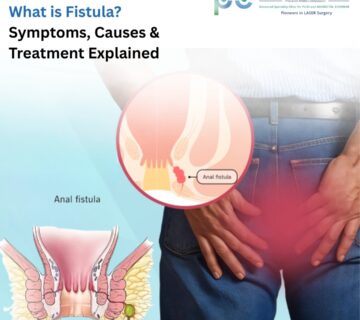
An anal fistula is a more serious condition that usually develops after an infection near the anus. When an anal abscess is not completely healed, it may create an abnormal tunnel connecting the inside of the anal canal to the skin outside the anus.
Unlike piles or fissures, a fistula often causes persistent pus discharge, swelling, recurrent infections, foul-smelling drainage, fever, and continuous pain around the anus. Patients may notice repeated formation of boils or abscesses in the same area.
Since a fistula rarely heals on its own, surgery is usually required. Modern treatment options such as laser fistula surgery, fistulectomy, fistulotomy, or advanced sphincter-saving procedures offer effective treatment with faster recovery and a lower risk of recurrence.
What Is the Difference Between Piles, Fissure, and Fistula?
Although these conditions affect the same region of the body, they have distinct characteristics. Piles are enlarged blood vessels that mainly cause painless bleeding and swelling. A fissure is a painful tear that causes severe pain during bowel movements and slight bleeding. A fistula is an infected tunnel that leads to pus discharge, swelling, and persistent infection.
Because the symptoms may overlap, self-diagnosis is not always reliable. A specialist can accurately identify the condition through a clinical examination and recommend the most appropriate treatment.
How Are Piles, Fissures, and Fistulas Treated?
Treatment depends entirely on the diagnosis. Piles are often treated with dietary changes, medications, rubber band ligation, laser surgery, or hemorrhoidectomy depending on their severity. Anal fissures usually respond well to medications, sitz baths, stool softeners, and dietary improvements, although chronic cases may require surgery. Anal fistulas almost always require surgical treatment because the abnormal tract does not close on its own.
Advances in laser technology have made treatment for many anorectal conditions less painful, minimally invasive, and associated with quicker recovery times. Patients can often return to their normal routine much sooner compared to traditional surgical techniques.
Frequently Asked Questions
Piles are swollen veins, fissures are tears in the anal lining, and fistulas are abnormal tunnels caused by infection.
No. Piles do not develop into fistulas because they are separate medical conditions with different causes.
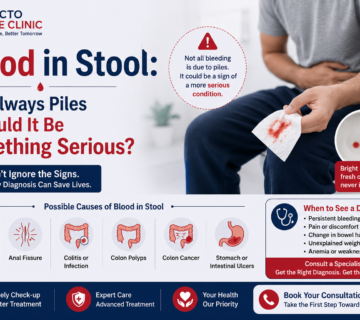
No. Bleeding may also occur due to an anal fissure, colorectal polyps, inflammatory bowel disease, or colorectal cancer. A medical evaluation is important to determine the exact cause.
In most cases, no. Anal fistulas usually require surgical treatment because the abnormal tunnel does not close on its own.
The most appropriate treatment depends on the specific condition, its severity, and the patient's overall health. A specialist can recommend the best option after a proper examination.
No comment