
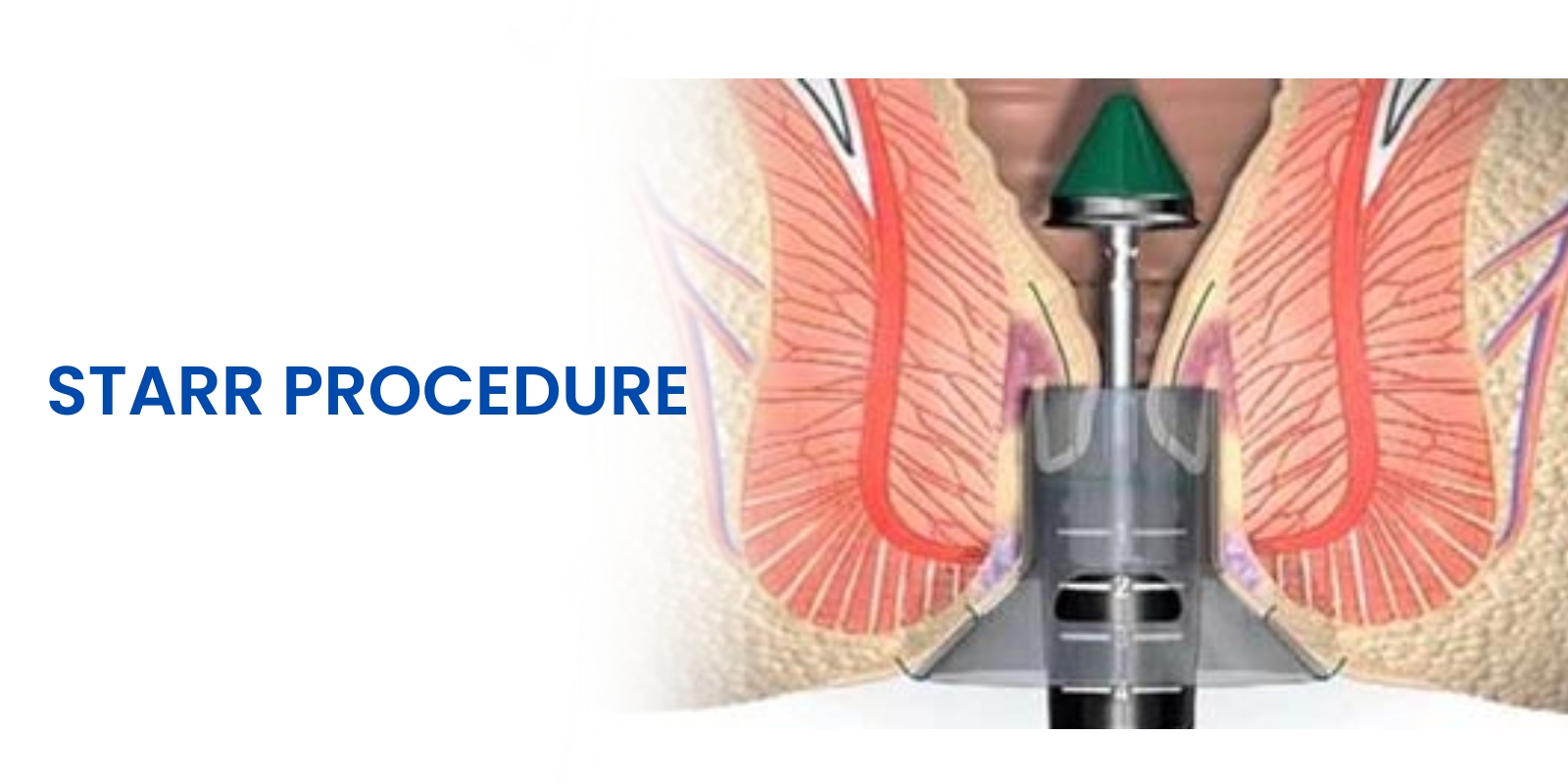
What is the STARR Procedure?
The STARR procedure is a surgical technique designed to treat conditions where the rectum bulges or collapses during bowel movements, causing difficulty in passing stools. These problems often occur due to internal rectal prolapse or rectocele, which can obstruct the normal flow of stool through the rectum.
During the procedure, a circular stapling device is inserted through the anal canal. The device removes the excess or redundant rectal tissue responsible for the obstruction. Once the abnormal tissue is removed, the stapler reconnects the remaining tissue, restoring the normal anatomy of the rectum.
Unlike traditional surgeries that require external incisions, the STARR procedure is performed through the anal canal. This approach helps minimize trauma to surrounding tissues and reduces post-operative discomfort.
Benefits of the STARR Procedure
- Minimally Invasive Technique
- Improved Bowel Function
- Reduced Post-Surgical Pain
- Faster Recovery
- Shorter Hospital Stay
- Improved Quality of Life
How the STARR Procedure Works
The STARR procedure is typically performed in a hospital setting using advanced surgical equipment. It usually takes around 30 to 45 minutes and is performed under appropriate anesthesia to ensure patient comfort.
The surgical process generally includes the following steps:
- A specialized circular stapling device is inserted into the anal canal.
- The surgeon identifies the excess rectal tissue causing obstruction.
- The stapler removes the redundant tissue inside the rectum.
- The remaining tissue is stapled together to restore normal rectal anatomy.
- This correction allows stool to pass more easily during bowel movements.
Because the procedure is performed internally through the anal canal, it avoids external cuts and reduces surgical trauma.
Symptoms That May Require the STARR Procedure
Patients suffering from obstructed defecation syndrome or rectal prolapse may experience several persistent symptoms that interfere with normal bowel function.
Common symptoms include:
- Chronic constipation
- Difficulty passing stools
- A constant feeling of incomplete bowel evacuation
- Excessive straining during bowel movements
- Frequent need for laxatives or enemas
- Sensation of blockage in the rectum
- Rectal discomfort or pressure
When these symptoms persist for a long time and do not respond to non-surgical treatments, the STARR procedure may be considered to restore normal bowel function.