
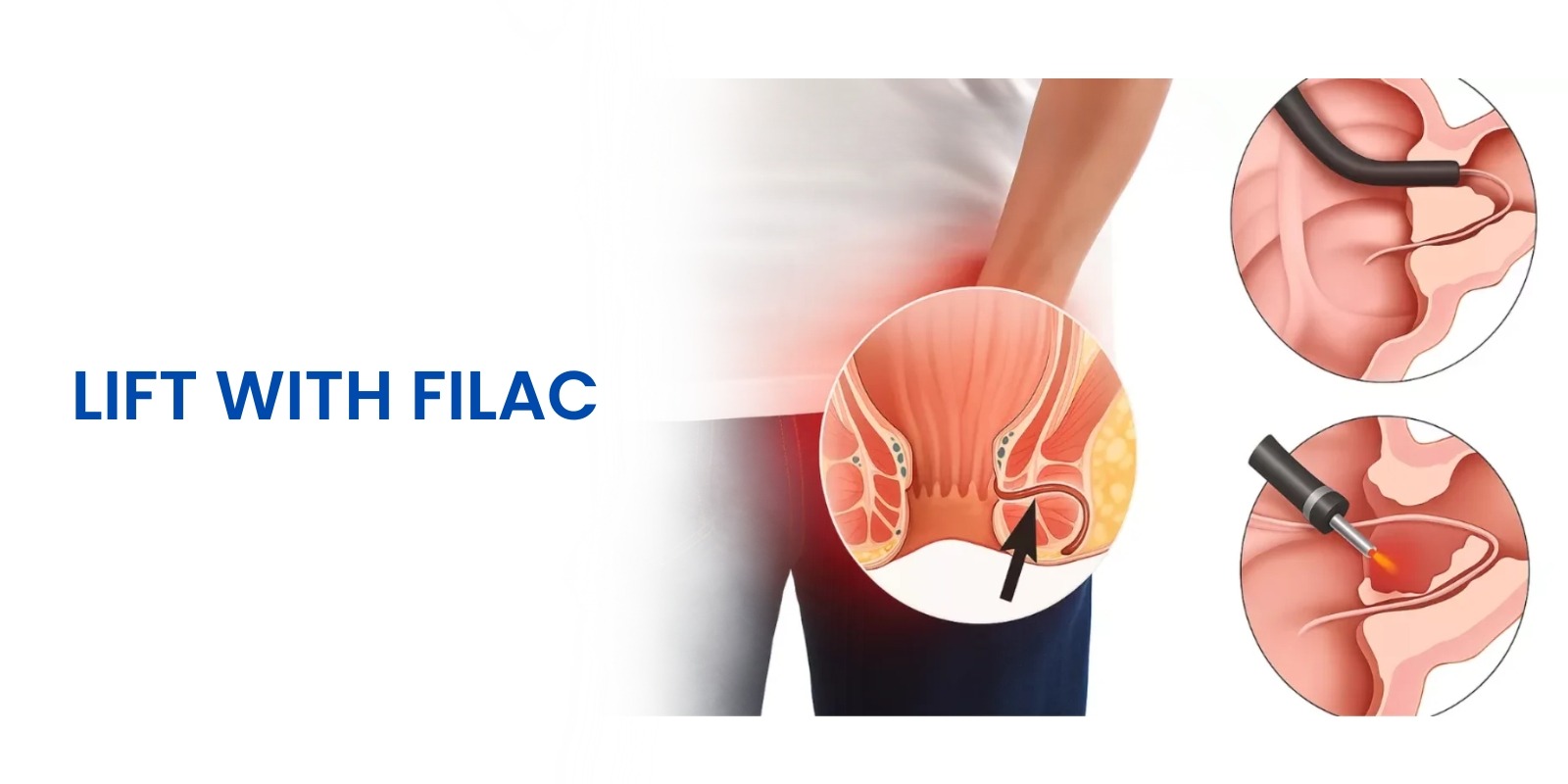
What is LIFT with FILAC?
LIFT with FILAC is an innovative treatment approach used to manage complex or recurrent anal fistulas. It combines two well-established procedures to achieve better outcomes and reduce the chances of recurrence.
LIFT (Ligation of Intersphincteric Fistula Tract) involves identifying and closing the fistula tract between the sphincter muscles to stop the spread of infection.
FILAC (Fistula Laser Closure) uses laser energy to seal the fistula tract from the inside. The laser shrinks and closes the infected tunnel while preserving surrounding tissues.
This combination helps eliminate the fistula tract while protecting the sphincter muscles responsible for bowel control. As a result, patients benefit from effective treatment with minimal risk of complications such as incontinence.
Benefits of LIFT with FILAC
- Minimally Invasive Treatment
- Preserves Sphincter Muscles
- Reduced Pain and Discomfort
- Minimal Bleeding
- Lower Risk of Recurrence
- Faster Recovery
How LIFT with FILAC Works
LIFT with FILAC is typically performed as a minimally invasive surgical procedure. The treatment is carried out using advanced surgical and laser techniques under appropriate anesthesia to ensure patient comfort.
The procedure generally involves the following steps:
- The fistula tract is carefully identified using specialized instruments.
- The LIFT technique is used to access the fistula tract between the sphincter muscles.
- The tract is ligated (tied off) to stop the spread of infection and prevent further communication with the anal canal.
- A laser fiber is inserted into the fistula tract.
- Laser energy is delivered gradually while withdrawing the fiber, sealing and shrinking the tract from the inside.
- The fistula closes naturally as the treated tissue heals.
This precise approach helps eliminate the fistula while protecting surrounding muscles and tissues.
Recovery After LIFT with FILAC
Recovery following LIFT with FILAC is generally smooth and quicker compared to traditional fistula surgery. Most patients experience mild discomfort for a few days after the procedure, which gradually improves as healing progresses.
To support proper recovery, patients are usually advised to:
- Maintain good hygiene in the anal area
- Follow a fiber-rich diet to avoid constipation
- Drink adequate water throughout the day
- Avoid excessive straining during bowel movements
- Take prescribed medications as directed
- Attend follow-up visits as recommended
Most individuals can return to their normal daily routine within a short period, although complete healing of the fistula tract may take a few weeks.