
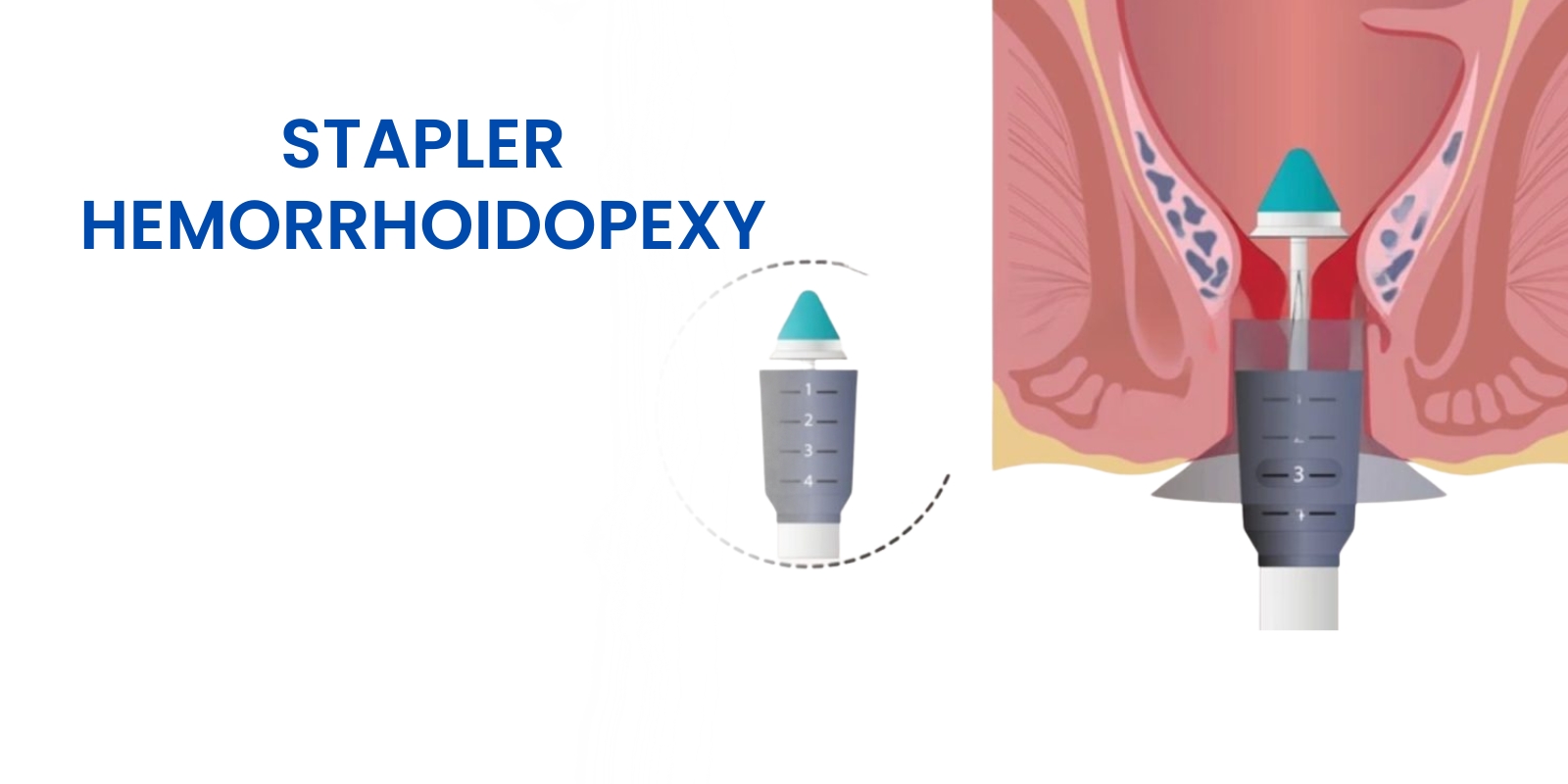
What is Stapler Hemorrhoidopexy?
Stapler Hemorrhoidopexy, also known as stapled hemorrhoid surgery, is a specialized procedure used to treat prolapsing internal hemorrhoids. Unlike traditional hemorrhoidectomy, which removes hemorrhoidal tissue, this technique uses a circular stapling device to reposition the hemorrhoids and reduce blood flow to the affected area.
During the procedure, a small portion of the rectal tissue above the hemorrhoids is removed using a surgical stapler. The device then staples the remaining tissue together, lifting the hemorrhoids back into their normal position inside the rectum.
This approach helps relieve symptoms such as bleeding, prolapse, and discomfort while minimizing trauma to the sensitive tissues around the anus. Because the surgery is performed above the pain-sensitive area, patients typically experience less post-operative pain compared to conventional procedures.
Benefits of Stapler Hemorrhoidopexy
- Reduced Post-Surgical Pain
- Faster Recovery
- Minimal Tissue Removal
- Shorter Hospital Stay
- Effective Symptom Relief
- Lower Risk of Complications
How Stapler Hemorrhoidopexy Works?
Stapler Hemorrhoidopexy is typically performed in a hospital setting and usually takes around 30 to 45 minutes. The procedure is done under appropriate anesthesia to ensure patient comfort.
The surgical process involves the following steps:
- A circular stapling instrument is carefully inserted into the anal canal.
- A small ring of excess rectal tissue above the hemorrhoids is removed.
- The stapling device then repositions the hemorrhoidal tissue back into its normal anatomical position.
- The stapler also reduces blood flow to the hemorrhoids, causing them to shrink over time.
Because the surgery is performed above the sensitive nerve endings of the anus, it helps reduce post-surgical discomfort and pain.
Recovery After Stapler Hemorrhoidopexy
Recovery after Stapler Hemorrhoidopexy is generally faster compared to traditional hemorrhoid surgery. Most patients experience mild discomfort for a few days, which gradually improves with proper care.
During the recovery period, patients are typically advised to:
- Follow a high-fiber diet to prevent constipation
- Drink plenty of water to maintain smooth bowel movements
- Avoid straining during bowel movements
- Take prescribed medications as directed
- Maintain good hygiene in the anal area
Many patients can return to their regular daily activities within a week, depending on individual recovery and medical advice.